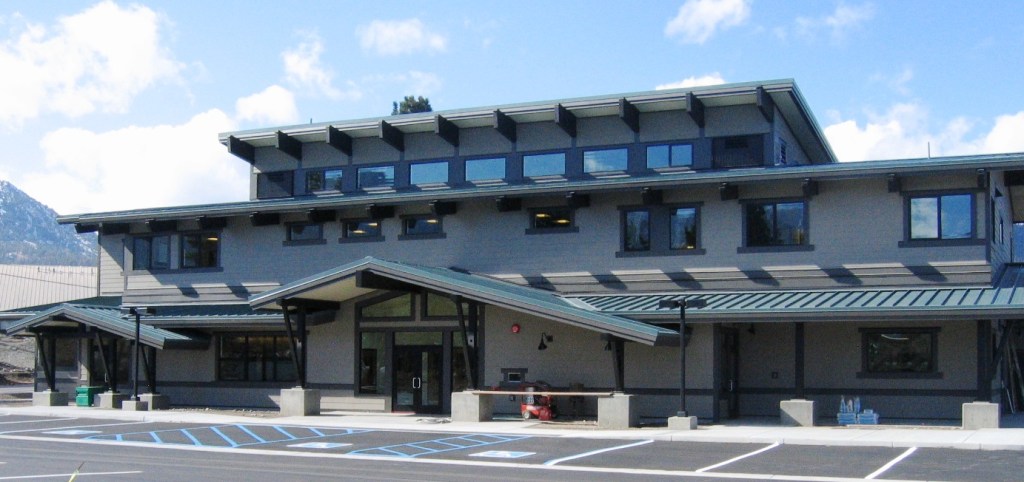
https://www.monocolibraries.org/branches/mammoth-lakes
Demographics—city:
https://www.census.gov/quickfacts/fact/table/mammothlakestowncalifornia/PST045219
Population: 8235
Median Household Income: $59, 620
Median Property Value: $337, 700
The 5 largest ethnic groups in Mammoth are:
White (Non-Hispanic): 83.4%
White (Hispanic): 37.5%
Asian (Non-Hispanic): 3.7%
Black or African American (Non-Hispanic): .9%
Native: .3%
Questions–Mammoth Lakes Branch Library
How do they describe the community of Mammoth Lakes?
Mammoth Lakes is population center—very outdoors oriented re industry + revenue. Lots more visitors now because they aren’t going overseas. Average costs of house sale doubled in last year. Poverty in double digits just west of here. Transient work base.
Outlying communities (up to Topaz Lake) tend to have population numbers around 200 to 300 in population. Local tribal communities include the Paiute and Shoshone tribes. Mammoth Lakes Branch library is currently trying to build bridges to lesser served communities: got rid of fines; hired child/youth services librarian. Other 6 libraries across county are open approx. 20 hours a week, each staffed by one person.
Public library system is managed under Mono County Department of Education and is funded by property taxes.
What do they see is the role of the Library in the community?
Serving youth—serving as a place of inspiration, discovery and creation. Current focus is to get teens in library. Learn, discover, turn around and create. Virtuous circle between learning and creating.
Invested in early literacy—“raising a reader”—early literacy story times, activity—where kids are creating. Experiencing, not just consuming.
How would they describe the children’s collection?
Getting better. Within last two years, asked for $9000 to improve board books, picture book, plus bilingual/Spanish. Created a more comfortable space–a safe space–where you can spend time. Investing in youth librarian plus part time early literacy coordinator—county wide. (Note: based on my sampling and review of the children’s collection, Mammoth Lakes Branch Library has the largest and well-developed children’s bilingual and Spanish collections of any of the libraries I’ve visited so far–it’s also located in the largest city so far.)
What do they see is the role of the children’s collection in the community?
Be responsive to the community. Public library collections are “accredited by the public”—collections constantly evolving. Everyone should be able to come into the collection and see themselves in it. Collections should show them expanded boundaries. Building collection of windows/mirrors.
Any standout features of the children’s collection?
A recent shift has led to separate spaces for high school, middle school, and graphic novels collections. The idea is to create more welcoming spaces for teens etc.
How would they describe the children’s collection in relation to local demographics?
Getting better—one example of the library’s responsiveness to local needs is their “book boxes”—kids tell staff their topical interest and then staff curate a ‘book box” consisting of two books plus an activity and/or manipulatives. These are expanded based on kid feedback.
In terms of serving local tribal communities–currently building relationships and trust.
Does programming with local schools. 50% of mandate is to create relationships with schools.
 Three and Some Trees